Saturday, August 25, 2018

The Second Coming

There is an old and powerful idea that, when Christ comes again, He won't come like an alien in a spaceship (contrary to popular belief) but in our hearts, in what our hearts are then able to see in the world, and in how we then act in that world.

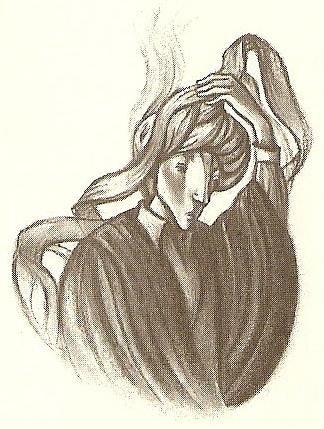
An anamorphoscope

Swedenborg, for instance, insists that the Second Coming will take place "in the Word," or, in other words, as He appears to us in it. When he "comes in the clouds of heaven," these clouds are the way truth appears to our senses, the literal narrative of scripture, things that are good and true but seem disconnected and arbitrary, i.e. not just scripture but the physical world itself, and when He appears in them, He is the divine life that will then animate it like my soul shines out from the sinew and pores of my face. The Second Coming, in other words, is when those sinew and pores don't matter anymore: when the arbitrary physical details of this life fade away, like when, in good conversation, you don't hear the sounds or even the words someone is saying (even though you do) but only the ideas that animate them from within. The Second Coming is liberation of Being

Scripture, all truth, and the world itself, like an anamorphoscope, will resolve itself into a living image of He who lies behind it like I lie behind my nose and mouth. His countenance will appear in the Word, in the world, to you, to me. He will animate us, animate the world, not controlling us any more than we control our arms when I decide to move it. For I don't say: "Arm, move two inches to the right. Good job, arm!" The arm moves itself, and I live through that movement. Likewise, when He comes, we will all be individual, distinct, free agents in and through whom Christ appears, in whom Christ's body builds and feels itself, where his countenance is engraved. It will all be a great spontaneous dance, effortless divine choreography, resolving itself into an image of Him who lives in and through its movements. Our gestures will be divine; each movement a sign and a token; life will be sacred again.

Then we will see the truth of the statement in the Doctrine and Covenants that "I am in your midst and ye cannot see me." He has *always* been here, appearing in the eyes of one who loves you, in the words you desperately need to hear from scripture, in the sudden, subtle light that pours over a sacrament meeting when the speaker begins to speak words you need to hear. This is not something that will come violently. It won't be scary. Instead, it will be like late in Genesis when Joseph comes out of disguise and we, with startled eyes, wonder how we could have ever *not* recognized him.

And this isn't something I'm just making up. Not only does Swedenborg think so, not only do many Sufis speak of a divine figure who will appear in the very countenance of this world, but many people who take psychedelics (with their mind intact the whole time) talk about how they can't imagine how they could have *not* seen the faces there in the walls, the childlike divine intelligence weaving the world into Being, the love that *is* the reality of existence.

This love will disclose itself. It will appear in the clouds of heaven. It, no, *He* will animate the world and the world will remember what it is for the first time in millennia. It will remember its song, and it will sing again. The colors will return to the air, and magic will return to life. We have forgotten, but we will have remembered. And all will be well. And all manner of things will be well.

Friday, August 24, 2018

Medical Marijuana and Facebook Emotional Baggage

So I know next to nothing about the medical marijuana proposition on ballot in Utah, the one that the Church has recently decided to urge its members to vote against. However, lots of people have been posting about it on Facebook, and I want to tell you what I've noticed about those posts and what *they* tell me about the situation.


But first you need to know about the effect *baggage* has on writing. Baggage is a word Stephen Harrod Buhner uses in his book Ensouling Language to describe an emotional center of gravity in a text, a kind of black hole, that affects the word choice and sentence structure. It focuses on one thing a little too much and not enough on another. There are gaps, little bits of displaced, diverted attention, which let you know there's something the author doesn't want to spend too much time thinking about. It's like how the closeted gay guy in church laughs a little *too* hard if someone makes a gay joke - everything around that black hole is emotionally distorted. There's a feeling of "don't look here!" but one that, too the right eyes, is all the more suspicious.

For instance, take this passage from a book called "The Forgotten Pollinators", analyzed in Buhner's book:

I took a swing at an extremely fast-flying gray blur of a bee, but missed. It was a male digger bee. It was an old friend to me: a big gray Centris pallida female, a harbinger of spring. In fact, I began studying the mating habits of this species with another friend, entomologist John Alcock, nearly 20 years ago. . . . I then swept up as many kinds as I could capture that day, recording their nectar sources and periods of activity. Back at the Arizona-Sonora Desert Museum at day’s end, I dumped my catch onto a piece of notebook paper and sorted the pile of now quiescent bees into groups to show Gary. . . . In all, during just a few morning hours, I had collected solitary and primitively social native bees belonging to 6 families, 20 genera, and perhaps as many as 50 different species. . . . The possibility of nabbing something new to science—by intensively sweeping our nets through the canopies of even the most common tree—was not an unrealistic expectation for the day’s bee hunt." 

Notice the words he uses to describe his "bee hunt": "took a swing," "swept up," "dumping a catch onto a piece of notebook paper," and even "nabbing." The bee is an "old friend to me." As Buhner puts it: "The way the material is written conveys a picture of a happy-go-lucky sort of guy, just hangin’, knockin’ back some brewskies, playin’ a little badminton with the guys, and catchin’ some rays . . . and a few interestin’ critterz, too." By compositional sleight-of-hand, he's diverting attention away from the fact that he killed the things. There's a counterbalancing, concealing shift in emotional weight that tries to hide that grim truth (which, as he knows, the reader may not understand) with a carefree, chill persona.

This thing happens all the time. Richard Dawkins is an expert at using hidden baggage: once, when asked if religion could fulfill a human need for belonging and purpose, he responded that "Well, there may be a profound need to *understand.*" Of course, understanding is *not* beauty, is *not* meaning, is *not* purpose, but Richard Dawkins (who only felt "slightly dizzy" when he tried on the "God Helmet," by the way) doesn't want to even come close to considering the role of irrational factors in human well-being, and so he always shifts attention away from the biological significance of religion, affect, and value whenever they come up. Those topics clearly make him uncomfortable, but he probably doesn't even admit that to himself. He'll just sneer and glare at you if you bring it up.

And it shows up online. Whenever there's a pithy, vaguely witty appeal to a clichéd ideal or moral imperative, you can tell that someone feels insecure about their position and wants to shout down doubt, to clarify their position to themselves with a shareable image macro. It happens on both sides of the political spectrum, of course: quotes by general authorities and John-Wayne-esque "I can't believe how stupid these millennial pansies are" posts are just as common as vacuous New-Agey, feel-good mantras and any excuse for SJW outrage (I'm realizing just now that I have a diverse friend group, haha). In each case, someone with ill-defined opinions, someone who knows how they *feel* but not what they *think*, is relieved when they find a post that they agree with, which tells them how to express what their feeling intellectually, and with a surge of dopamine, they click share.

And this, in a more subtle form, is what's happening with Proposition 2. People against it generally fall into 2 categories: 1) people who just share the email or LDS Living links without comment, and 2) people who try to defend the church's controversial actions. The first might not know about the controversy at all; they are just doing social media missionary work like general authorities encourage us to do. They're trying to help, and even if they don't, their heart is in the right place. Don't get mad at the widow for her mite, guys. The second are aware of the controversy and try to defend the church's position. They tend to look at the nuances of the bill, from what I've seen, partially because the Church has also taken a nuanced stance (apparently they're *for* another medical marijuana bill) and partially because it's hard *not* to look at nuances if you want to defend a controversial political decision by the church.

However, from what I've seen, those for the bill and who criticize the church tend to lack any and all nuance. The sentiment seems to be something like "The Church is violating the separation of church and state" or "Medical marijuana is obviously good, and the church is against it, so it must obviously be bad." I haven't yet seen a post by someone for the bill and against the church that addresses the nuances and technicalities that the apologists point out. Of course, they almost certainly exist, but I'm not trying to say they don't. I *am* pointing out that, by and large, there's some baggage in these anti-church posts. They're not calm or reasonable. They have the air of mob mentality. Not thought, but feeling *masquerading* as thought, thought animated by unconscious feeling-baggage, is what's talking.

Of course, I could be wrong. I could be the victim of my own confirmation bias, my own baggage. I could be seeing things.  I suspect not, though. And here's one reason why: most of these people are ex-Mormons. I have long said something that, although not entirely accurate, names a trend and allows us to see it: that you can never stop being Mormon, that if you try, you'll only ever prefix it with an "ex-." ex-Mormons of a certain (common) type are the most religious of folks, even if they're atheists. They care as much (if not more) about the Church now than they did while they were members. A self-aware, beloved ex-Mormon friend of mine once satirically impersonated the r/exmormon subreddit by saying "Guys, did you know Joseph Smith didn't even prophet?? ... I *know*, right???!!" The whole subreddit is a vile, self-indulgent cesspool where people revel in their (valid) trauma instead of trying to process it. But, as all trauma tends to, it repeat itself unconsciously. Just as the abused often becomes the abuser, the persecuted tend to become the persecutor. The Church fits that bill, as does Christianity at large and (dare I say it) the LGBT movement. Each hasn't given up its defensive mentality even when it's in political power. And so it makes new enemies, which, themselves, go on to make new enemies in time, and so on ad infinitum until the world drowns in a wave of strife.

Can we just process our traumas without trying to eke revenge out of those who did them to us? That doesn't solve anything; it traumatizes others and ends up re-traumatizing you. Get off Facebook and go see a therapist.

Wednesday, August 22, 2018

The Inner Meaning of Harry Potter

So I’ve been thinking a lot about the deeper meaning of the Harry Potter series by JK Rowling. Harry is the *boy who lived.* What does that mean? He's the one who, despite all odds, faces pain, faces vulnerability, faces *death* head on. He doesn't hide from it. He bears the mark of trauma as a scar, a scar on his forehead, the place of consciousness, of sight, the prefrontal place where we are ourselves with others. He *is* this pain, he *is* this vulnerability, this weakness, and it is only because he does not "fly from death" that he is able to live, and moreover, that he is able to love. For love is what happens when you face death, and the dissociation is what happens when you flee from either.

And dissociation isn’t just something that happened to Voldemort. We each “fly from death” whenever we refused to feel the dull ache within, the trauma of our childhood that we’ve forgotten which nevertheless affects our gestures and our gait, causes us to repeat it endlessly and unconsciously. Evil, in fact, *is* the unwillingness to feel pain. And whenever we turn away from it, fly from it, He Who Must Not be Named shows up. Quirrel, the awkward stutterer, is the ungroomed recluse who you would feel scared of if he showed up to school in a trenchcoat one day. He is the abused who becomes the abuser, the one whose pain has become malevolent. And so Voldemort *naturally* appears in the back of his head-- the primal brain, the part that acts and doesn’t reflect, what compels, what addicts, what cuts and drinks and abuses -- not the forehead, not the Prefrontal Cortex, not the place where, in full consciousness, we feel our pain and our vulnerability. Harry suffers, suffers consciously, and so he can love. He loves, and so he can bear the reality of touch in a way that one who hides from their pain can’t.


This story repeats itself, in a different octave, in the second entry to the series. When Harry descends into the Chamber of Secrets, he faces the primal terror lurking beneath, what we refuse to look at, what will turn us to stone if we look at it, what inflicts the freezing motion that a rabbit, likewise, would undergo if it saw a fox. This paralysis is the unexpressed motricity of the fight or flight response that appears as muscle tension, what, whenever it occurs, is symptomatic of unfelt trauma. Our shoulders stiffen and never relax again. We try to calm them but feel ourselves, once again, drawn by an unconscious magnetism to the stiffening of a startled cat with an arched back. For trauma will repeat, will attack, in compulsive and ever-worsening ways until we face it, until we descend into the substructure of Being, of our own being, and rescue what it stole: the virgin, "Ginny," the virginal, soft, innocent aspect of our being that had long since been under trauma's thrall, our very own soul, our "anima." And that's not easy. You have to face the trauma, face the snake that slumbers in us, the Kundalini serpent in our nervous system that, left unexpressed in its depths, makes us destructively act out our traumatic experiences, and come out the other side. You have to die. The muscle tension in you, the seething panic in reptilian brain that hides and pounces and eats, must be felt for the pain that it is, not numbly, not as “ever-present,” but with the sharpness and intensity of the original pain. This is, perhaps, best expressed by the feeling you have when, crossing your legs in Zen meditation so that the ankles lie above the thighs, you feel a stabbing pain that is, nevertheless, only the habitual muscle tension in your legs turned up tenfold. Wincing, you relax them, and then you realize, that, wait, you *can* relax them, that *that’s* what peace feels like. You had forgotten, and it was only your capacity to face your pain multiplied to a visible caliber that allowed you to remember, to soften. This is killing the snake; this is rescuing Ginny; this is the birth of love, of touch, facilitated only by our capacity for death and rebirth, our phoenix nature, the human ability, which we all to often forget, to endure pain that feels like it will last forever and discover its other side.

Lastly, this last entry to the series narrates this same story transposed to its ultimate level. Harry must die. He must take the part of him that seethes against vulnerability, his microcosmic, inner Voldemort, his own “flight from death,” to the gates of death. He must shed the cloak of invisibility and bring Voldemort to where he won’t go on his own: to the brink of eternity, to the cosmic Kings Cross Station, the veil, that divides this world from the next. This is the place where you meet your higher self, what some have called the Guardian at the Threshold, where Voldemort, who flies from death, can only ever see himself as a dessicated husk who has wasted this life whose purpose *is* to die. But Harry, who is unafraid of death, lives again. And that is the great secret. Insofar as you die, insofar as you lose yourself, you gain yourself again, are resurrected. This is the truth of Harry Potter, what makes him *the boy who lived*: don’t pity the dead, pity the living. And above all, pity those who live without love.

Saturday, May 12, 2018

Jordan Peterson's Ideas Are Alive

Here's something I wrote in my personal journal about the lecturer, author, and psychologist Jordan Peterson:

I was thinking about how Jordan Peterson knows some topics very well, from the inside out, as it were, even when he's superficial about others. He knows Jung not just intellectually but deeply and passionately. He had all of Heidegger's insights without ever reading Heidegger. But he doesn't understand Derrida. This didn't make sense.

And then I remembered something I wrote in high school on Facebook: you understand the wheel a lot better if you reinvent it. And it's true: no one understands an idea like the person who had to struggle toward it. Others don't see the process; they only see the product. They see it from the outside, as something you can stand apart from, as something you can compartmentalize, catalog. They see it, but they don't inhabit it. They only see abstractions, where the reality is something lived.

Peterson *inhabits* his ideas like this. He doesn't look at them from the outside: he goes into them, tries them on like a glove, knows them from a first person perspective. He doesn't teach abstractions but lived, experiential, existential truths. Swedenborg said something along those lines: that if we are merely *taught* an idea, without having to struggle toward it, without having to doubt it or weigh it on all sides, the thought appears wooden in the spiritual world, not alive. It doesn't move; it's inanimate; it's tacked on. Only when one struggles toward the idea against doubt does it come to life, which Swedenborg suggests is the reason we have doubt at all.

Peterson's ideas are full of life, full of growth, emanating what Swedenborg would call goodness, the spontaneous order that organizes ideas from within. They have an organic quality, following one another like branches or twisting capillaries. They are like a breath of fresh air, a bright, crisp glimmer from the morning of all existence. They are like childhood. And Peterson is childlike. Norman Doidge writes that Peterson assumed "as a child would--before learning how dulled adults can become--that if he thought something was interesting, so might others." Peterson has the aura of a child, not one you don't like, but one that brings healing, brings the star.

And it is this youthfulness that is, I think, Peterson's point, what the gods sent him here for. He has been protected from understanding or even encountering certain ideas from without, because then they would be wooden, mechanical, abstract. He was left alone to recreate Heidegger, even to recreate Swedenborg's exegesis of the Bible. This is spontaneous, growing, shape-forming, animate, totally unlike the abstract ways so many misunderstand Heidegger and Swedenborg. The gods use him to grow them, to reembody them freshly and spontaneously, youthfully, so that their forces can come alive in others. Heidegger cannot come alive today, cannot lend his impulse to anyone. He's just too dense, too old. But Heidegger's ideas resurrected, reincarnated in Peterson can. And this can only happen because Peterson never read him.

Swedenborg was told by God not to read any works on theology, and I suspect this is why. And even I, who am embarrassingly underread in everything academic, have recreated the ideas of many philosophers. I knew about deconstruction's living impulse, as it were, years before I read Derrida. I have independently come up with many insights about the Book of Mormon. This is discouraging, but it's also curious. I suspect I'm being held back from reading these books so I can understand them the right way: by reinventing them. This cuts through abstraction to the living center. It revivifies. It resurrects.

Wednesday, April 4, 2018

General Conference's Inner Meaning: Solemn Assembly

Hey, y'all. General Conference was awesome. It felt to me like something happened, not just physically, but spiritually, viscerally, in the depths of my and collective being. Life had somehow re-oriented itself. It was an act of becoming-new, of a clearing away of obstructions.


And it was an act. General Conference is not just something heard, something said, but something done. It furthers the Gospel. It acts it out en masse. This acting-out occurred in the words of the conference. What was said did something. They blessed us. They changed the rules of the game

I felt prompted to use my blog to tell you, insofar as I am able, the acts that occurred by means of the speech. I will probably not do a very good job. But I want to let you know that the Church is real and does further itself, does become itself, in a bigger way than you can possibly imagine. It seethes beneath the surface. More is done by events like this than we realize. This "seething" is Swedenborg's inner meaning, what communicates to the divine in us, what helps the angels and spirits with us know what to do. They are listening to General Conference too, as we do. They hear what I am going to stammeringly translate. They hear in deeds.

As such, know that this act I am doing is an attempt to further the act done by General Conference itself: the acting-out of love and the spreading of those deeds here and far.

I will try to do this for each talk, or at least every talk by a member of the twelve, as audacious and ambitious as that sounds. I probably won't finish. But I hope this will be valuable for someone.

I've finished the "interpretation a la action" for the first talk, the solemn assembly. The talk is in normal text, and the interpretation is in bold. Here it is:

Brothers and sisters, President Nelson has asked that I handle the business of the solemn assembly for which we are gathered today.

An initiation into communality, into love. By saying “brothers and sisters,” President Eyring. reconfigures and re-orients our minds to a consciousness of brotherhood, of sisterhood. We become brothers and sisters. This is an initiation into the spiritual sense of family, the becoming-spiritual of the family. Here, spiritual ties forge themselves. We become our spiritual counterparts. This is an initiation into, not finite, earthly family, but eternal family, not conditional family, but unconditional family. We realize in our very flesh, our everyday consciousness, the light that forges ties in the first place, the force that works itself into consciousness and makes links, the essence of relationship itself. We become embodiments of relationship. We relate to relationship. In this sense, we represent representation, and as with all movements of this type, a spiritual glow emerges that results from a kind of feedback loop. This feedback loop depicts on a lower level the reality that produces that lower level. It manifests what it depicts.

President Nelson is, in this case, a manifestation of the principle that realizes in the flesh the power of realizing in the flesh. President Nelson is, here, pure performativity: the act of creating what you speak as you speak it, a kind of efficacious speech, a speech as will, the words no longer merely descriptive, merely passive recipients of the world, but active creators of it. The power of godliness here realizes itself. God descends and acts in the acting of what is spoken. The “solemn assembly,” as the communality emphasized above, is the realization in us of a great deed, a great performative speech-act, that reconfigures and orients the consciousness of everyone involved. This act can only occur with both in a context, in a situation, with both people to speak and to hear, to present and sustain, to proclaim and to witness. This is both active and passive, both here and there. This is the reality of life: a great inhalation and a great exhalation. This is the movement of divinity, acted out and writ large for everyone not only to see but also to take part in. This is a ritual. This is a correspondential embodiment.


This is an occasion of great significance for members of The Church of Jesus Christ of Latter-day Saints throughout the world.

Here, he’s situating the event just mentioned. It is not only what it is, here and now. It has effects that reach out to everyone, the whole world, and, by extension, the whole spiritual world. It resonates through everyone that witnesses it, which means that they too become manifestations and embodiments of it. The “Church of Jesus Christ of Latter-day Saints” is here not just a finite organization but also a specific spiritual tone, a kind of high-pitched resonance, that emanates from certain centers. This “tone” is also a specific mode of being, something that re-creates itself, resurrects itself, perpetually through space and time. For a “center” to emanate this tone means that the tone exists self-generatively, as a movement of self-creation, there. President Nelson is such a mode of self-creation, such a center, but so is the Church at large. As such, every person who hears the tone and subsequently sounds it acts out that mode of being and introduces themselves into the grand body that it signifies. This is bracketed by the physical boundaries of the Church, though it extends beyond it like an aura. It has its foundation in the rituals and ordinances. They are its “body.”

Dating from October 10, 1880, when John Taylor was sustained to succeed Brigham Young as prophet, seer, and revelator and President of The Church of Jesus Christ of Latter-day Saints, each of these occasions has been designated as a formal solemn assembly of the body of the Church to express the voice of the Church.

Here, he states that this spiritual performative act has occurred before and will occur again. It is a deed that exists, in the most specific sense, whenever one manifestation of God dies and another must take his place, but in the most universal sense, whenever anything changes in the way the Holy Ghost reveals himself. Say you’re reading the Book of Mormon and you transition from the Book of Alma to the Book of Helaman. The change in spiritual qualities involved here, bright as they may be, involves a kind of rebirth, a re-incarnation of certain spiritual qualities in a new medium, a new vessel, a kind of shattering and re-forming, a kind of death and rebirth. This is what is occurring here and must always occur: a time of transition where authority gathers itself up and finds itself anew in a new vessel. Life must die to be reborn, and spirit must scatter itself to find itself. This is the way of things.
We will vote by quorums and groups. Wherever you are, you are invited to stand only when requested and express by your uplifted hand that you choose to sustain those whose names will be presented. You should vote only when asked to stand.

Here, the “quorums” and “groups” are specific embodiments of spiritual qualities. They realize themselves in these quorums and groups, and when we sustain the new leadership, the spiritual quality manifest by the President and the leadership realizes the way it is grounded in these more specific qualities. In a broader sense, this is a realization of the more universal resonance that exists in all these “tones” in the specific way that they do. The quality of “Mormon-ness” exists in both the quality of Priesthood and the quality of Womanhood. It is the universal one in each. To sustain them is to act out and carry forward this resonance. This resonance here re-creates itself.
The General Authorities assigned to the Tabernacle and the Assembly Hall on Temple Square will observe the voting in those facilities. In stake centers, a member of the stake presidency will observe the voting. If anyone casts a contrary vote, those individuals should contact their respective stake presidents.

Here, the ways in which this resonance, this act of witnessing, of re-creation in particulars, is acted out is detailed. Someone “opposing” or even saying “opposed” does not impede this realization, this performative act, but only alerts it to particular nuances in its situation. It is like an act of perception: what it does not act out, it can see. Just as one forgets what one can do well in an embodied sense (think riding a bike: you don’t know “how” you do it; you just do it), here, what one does not embody one can see clearly. This is a chink in the flow of movement, but one that can later be mended.

We will now proceed. Again, please stand and vote only when asked to do so.

Here, the acting-out of the performative re-creation of the church begins to occur. What happened before was less a realization of the act than a necessary description of the act, a kind of reserved, preparatory action, like how Saturday is the day we get ready for Sunday.

We ask members of the First Presidency to please arise.

To arise, in this sense, is to manifest the quality you embody. Here, the quality of the First Presidency manifests itself.

It is proposed that the First Presidency sustain Russell Marion Nelson as prophet, seer, and revelator and President of The Church of Jesus Christ of Latter-day Saints.

To “propose” like this is to prepare the spiritual qualities for reception, for embodiment. Just as the quality of the first presidency embodied itself just earlier, the more universal quality it manifests here also “arises.”
Those of the First Presidency in favor, please manifest it.

This is the union, the marriage, the consummated act whereby the more universal quality manifests itself in the less universal quality of the First Presidency. If the “proposal” was a proposal, this is the wedding. This marriage repeats itself accordingly in the next few lines.

It is proposed that the First Presidency sustain Dallin Harris Oaks as First Counselor and Henry Bennion Eyring as Second Counselor in the First Presidency of the Church.

Those members of the First Presidency in favor may manifest it.

It is proposed that the First Presidency sustain Dallin Harris Oaks as President of the Quorum of the Twelve Apostles and Melvin Russell Ballard as Acting President of the Quorum of the Twelve Apostles.

Members of the First Presidency in favor may manifest it.

It is proposed that the First Presidency sustain as members of the Quorum of the Twelve Apostles: M. Russell Ballard, Jeffrey R. Holland, Dieter F. Uchtdorf, David A. Bednar, Quentin L. Cook, D. Todd Christofferson, Neil L. Andersen, Ronald A. Rasband, Gary E. Stevenson, Dale G. Renlund, Gerrit Walter Gong, and Ulisses Soares.

Members of the First Presidency, please manifest it.

It is proposed that the First Presidency sustain the counselors in the First Presidency and the Quorum of the Twelve Apostles as prophets, seers, and revelators.

Members of the First Presidency will please manifest it.

The First Presidency will now be seated.

Here, the act ceases. The quality of the Church has been reborn on this level.

We invite Elder Gong and Elder Soares to take their places with the Quorum of the Twelve.

Here, certain qualities have now been re-embodied and now assume their full stature as they were before.
The members of the Quorum of the Twelve Apostles only, including Elder Gong and Elder Soares, will please arise.

Here, the more universal quality begins to embody itself on a slightly lower level by the act of these lower levels stepping forward, as it were.
It is proposed that the Quorum of the Twelve Apostles sustain Russell Marion Nelson as prophet, seer, and revelator and President of The Church of Jesus Christ of Latter-day Saints, together with his counselors and members of the Quorum of the Twelve Apostles as they have been presented and voted upon by the First Presidency.

Members of the Quorum of the Twelve Apostles in favor, please manifest it.

Here, the act is consummated again.

You may be seated.

And it ceases.


We ask the General Authority Seventies and members of the Presiding Bishopric to please arise.

Again, now it begins to be reborn on an even lower level.

It is proposed that all General Authority Seventies and members of the Presiding Bishopric sustain Russell Marion Nelson as prophet, seer, and revelator and President of The Church of Jesus Christ of Latter-day Saints, together with his counselors and members of the Quorum of the Twelve Apostles as they have been presented and voted upon by the First Presidency.

All General Authority Seventies and members of the Presiding Bishopric who are in favor, please manifest it.

And it is consummated.

You may be seated.

And the act ceases.

We ask the following to please arise wherever you may be throughout the world: all Area Seventies, ordained patriarchs, high priests, and elders.

And, again, reborn on an even lower level.

It is proposed that Russell Marion Nelson be sustained as prophet, seer, and revelator and President of The Church of Jesus Christ of Latter-day Saints, together with his counselors and members of the Quorum of the Twelve Apostles as they have been presented and voted upon.

All in favor, please manifest it.

And it happens.

Any opposed may so manifest it.

Please be seated.

And it stops.

Will all members of the Relief Society—that is, all women 18 years of age and older—please arise.

Here, womanhood itself, insofar as it participates in that universal tone, lends itself to the manifestation of that universal tone.
It is proposed that Russell Marion Nelson be sustained as prophet, seer, and revelator and President of The Church of Jesus Christ of Latter-day Saints, together with his counselors and members of the Quorum of the Twelve Apostles as previously presented and voted upon.

All in favor, please indicate by the uplifted hand.

And it happens.

Any opposed may so indicate.

You may be seated.

And it ceases.


Will all those holding only the Aaronic Priesthood—that is, all ordained priests, teachers, and deacons—please arise.

The Aaronic quality manifests itself.


It is proposed that Russell Marion Nelson be sustained as prophet, seer, and revelator and President of The Church of Jesus Christ of Latter-day Saints, together with his counselors and members of the Quorum of the Twelve Apostles as previously presented and voted upon.

All in favor, please indicate by the uplifted hand.

It lends itself in act.

Any opposed may so indicate.

You may be seated.

And it ceases.

Will the young women who are ages 12 to 18 please arise.

It is proposed that Russell Marion Nelson be sustained as prophet, seer, and revelator and President of The Church of Jesus Christ of Latter-day Saints, together with his counselors and members of the Quorum of the Twelve Apostles as previously presented and voted upon.

The quality manifest by youth in womanhood insofar as it participates in that universal quality now helps manifest that quality.

All in favor, please indicate by the uplifted hand.

It does so.

Any opposed may so indicate.

You may be seated.

And it stops.

We now ask that the entire membership, wherever you are located, including all of those who have previously stood, please arise.

Here, the whole reach of that spiritual quality, the whole body it reaches and pervades, embodies that quality manifestly and in act. It has fully become itself, and it is here reborn, resurrected.

It is proposed that Russell Marion Nelson be sustained as prophet, seer, and revelator and President of The Church of Jesus Christ of Latter-day Saints, together with his counselors and members of the Quorum of the Twelve Apostles as they have been presented and voted upon.

All in favor, please indicate by the uplifted hand.

And it comes to pass.

Any opposed may so indicate.

You may all be seated.

And it stops.

Thank you, brothers and sisters, for your love and support.

For which this spiritual quality feels loved.

Wednesday, February 7, 2018

Touch, Prayer, and the Middle Voice: A Sacrament Meeting Talk

Hello, everyone. I’m Christian, and my name is Christian. I’m a grad student at BYU, where I’m doing a master’s degree in Comparative Studies. I gave a testimony earlier this month about the connection between the Gospel and something called the “middle voice,” and I was asked to give a talk today about that topic and its connection with prayer.

If you don’t remember high school English, the active voice and the passive voice are two ways we relate verbs (or actions) to their subjects. If I say “the cat ate the mouse,” the word “ate” is in the active voice. But if I say “the mouse was eaten by the cat,” “was eaten” is in the passive voice. The active voice is active: with it, you act, and you are not acted upon. But the passive voice is passive, connected with things that are acted upon.: “you are mocked,” “you are helped,” etc.

However, the middle voice describes a verb that makes its subject both active and passive at the same time. English doesn’t have a middle voice, but Biblical Hebrew and New Testament Greek do, as do Albanian, Sanskrit, Icelandic, Swedish, and a few other languages. An example of the middle voice would be something like “The boy washes,” when it’s understood that the boy is washing himself. In English, you’d ask “Who is the boy washing? His dog? His feet? His car?” But the object of the sentence is the subject. “The boy washes.” Period. Full Stop. Who washes? The boy! Who is washed? The same boy!

This bizarre situation is, nevertheless, commonplace. We encounter it every day. I will give two examples of places where we encounter the middle voice: touch and prayer. In a sense, they are both the same thing, but we will only come to that point slowly.

When we touch another person, whether in a handshake, a pat on the back, or an embrace, we simultaneously are touched. Active and passive together. The Middle Voice. This seems pretty straightforward, right? But it has profound consequences. Take trauma, for example. The thesis I have been writing in my grad program is about trauma and how people deal with it, specifically in art and literature. And in my survey of the topic, I noticed some fascinating things. People suffering from PTSD withdraw from the world with their bodies. Their muscles tighten. They exhibit more-or-less constant fight-or-flight responses. They have declared the world an enemy. They cannot relax. This is a regrettable situation, one not unlike the autism spectrum disorder I suffer from. But touch therapy is amazingly helpful.

I have a friend who suffers from PTSD. She has a friend who is a massage therapist. When she finally volunteered for touch therapy, she initially resisted the presence of the other person’s touch. In a sense, she touched the other person with her skin, but she would not let herself be touched. She was not vulnerable. But when she relaxed, when she let in the pressure and felt safe doing so, when she let herself be touched, she began to weep. And she didn’t stop crying for three hours. A burden was lifted in a way nothing else could do.

When we are traumatized we cannot have both self and other at the same time. I cannot let you in. To the traumatized mind, it’s not safe enough. PTSD, in this sense, is a radical distrust of being. One touches, perhaps, and others can touch you, but never together. One is always on alert: like a startled cat, your shoulders are arched and your eyes are wide open, albeit constantly. All of life is life-or-death, or at least it seems that way. The traumatized person, therefore, needs to feel safe. That’s what PTSD therapy seeks to do. Mindfulness helps with this. So does art. And as I mentioned, so does touch. Each of these, to my mind, are ways of acting in the middle voice. When we are mindful of our fear, we both watch and are watched. When we represent our pain through art, we are both the painter and the subject of the painting. And in touch we are vulnerable, both the toucher and the one touched.

Prayer is like this. In it, I become naked before God. I tell him all my fears and insecurities. I speak out my anxiety, my depression, and my self-hatred to an empty room, and suddenly an inexplicable “something” comes into my heart not unlike the effect of a hug or a tender hand on a shoulder. I begin to empty myself of myself, to loosen my muscles. I lose my fear. For, like touch, prayer can make me feel safe. When I pray, just as in touch, I feel myself on both sides of a barrier. I loosen my shoulders. I relax, perhaps weep. I feel I could walk into a battlefield and be completely safe. That I am “encircled about eternally in the arms of his love,” to quote Lehi.

Prayer is this eternal embrace. It is the act where God and the soul touch, where something invisible yet very present is exchanged. Sometimes it’s illumination. Sometimes it’s comfort. Sometimes it’s a voice of warning. But is this illumination your thoughts? Your feelings? That’s the wrong way of looking at it. It is not active self-suggestion, and it’s not passive ecstasy, any more than touch is exclusively active or passive. You speak, and then you listen. You act, and then you receive. But in the best prayer, you enter the middle voice, and these acts become one. Acting is receiving. This can work on a small scale, when you ask for a small blessing and it comes, albeit without heavenly trumpets, or on a large scale, as when Enos had a “mighty wrestle before God” for his own soul and the welfare of his Lamanite brothers and sisters.

But sometimes this doesn’t happen. Sometimes prayer is awkward. Sometimes nothing happens. May I suggest for those in this state that action is and can be a kind of prayer. So if the heavens are quiet, if nothing moves, realize that your works themselves can be the answer to your prayer. Go and act in the way you think God would have you act. Make your acts of service a psalm. Offer up your voice in your deeds. And then, perhaps, inexplicably, you’ll discover that God was guiding you invisibly the whole time. This is familiar to writers who, when writing a rough draft, discover gems in the text that they did not expect or intend. Anyone who’s borne a testimony and found themselves compelled to speak words greater than their own knows this lesson. You are more than you. Your activity is also a passivity. You works are a grace.

My girlfriend wrote a poem expressing this point. I consider it inspired. An excerpt from it reads


“Oh Child,
If you want to hear the chorus of angels,
You just need to sing.”


How do you bring God into the world when he is absent? Pray, yes. But don’t forget to act. Have confidence that your actions, guided by your conscience, mean more than you think they do. They are full of significance that you can’t anticipate. You act, and so you are acted upon. The best prayer, and the best thought, is both action and passivity at once. You don’t look back. You only look ever forward.

I bear you my testimony that God lives, that you can reach him through prayer. You are safe. You are listened to. You are loved.

I say these things in the name of Jesus Christ, His Son.

Amen.